


-

About Flexfilm 2
-

Getting Started 10
-
Core Fundamentals 10
-
-

Orders & Support 83
-
Shipping 10
-
Dealer Rewards 13
-
Ordering & Account 7
-
Pre-Cut Patterns 2
-
General 9
-
Warranty 6
-
Billing & Tax 3
-
Route Package Protection 2
-
Returns & Refunds 2
-
Shop Pay 2
-
Training 1
-
Dealer & Installer Program 4
-
Selling & Quoting 9
-
Marketing & Growth 8
-
Business Operations 5
-
-

Installation Resources 19
-
Architectural 4
-
Automotive 5
-
General 10
-
-

Architectural Window Film 54
-
Safety & Compatibility 17
-
Ownership 2
-
Fundamentals 16
-
Buying Guides 4
-
Performance & Privacy 6
-
Product Guides 9
-
-

Automotive Window Film 40
-
Installation & Ownership 18
-
Product Guides 11
-
Legal & Compliance 3
-
Buying Guides 8
-
-

Tools 10
-
Cutting & Prep 3
-
Application 3
-
Measurement & Layout 2
-
Specialty 2
-
-

Plotters 8
-
Ownership 6
-
Buying Guides 2
-
-

FlexCut Software 25
-
Account & Licensing 5
-
Getting Started 10
-
Troubleshooting 2
-
Using FlexCut 8
-
-

Paint Protection Film (PPF) 10
-
Ownership 3
-
Fundamentals 4
-
Product Guides 3
-
-

Surface Coatings 13
-
Product Guides 7
-
Fundamentals 3
-
Ownership 3
-
Pressure-Sensitive vs. Dry Adhesive


Pressure-Sensitive vs. Dry Adhesive
Every window film needs to bond to glass, but the two adhesive systems Flexfilm uses — pressure-sensitive adhesive (PSA) and dry adhesive (sometimes called CDF adhesive) — get there in very different ways. Neither is universally "better"; each is suited to a different kind of installation.
Pressure-Sensitive Adhesive (PSA)
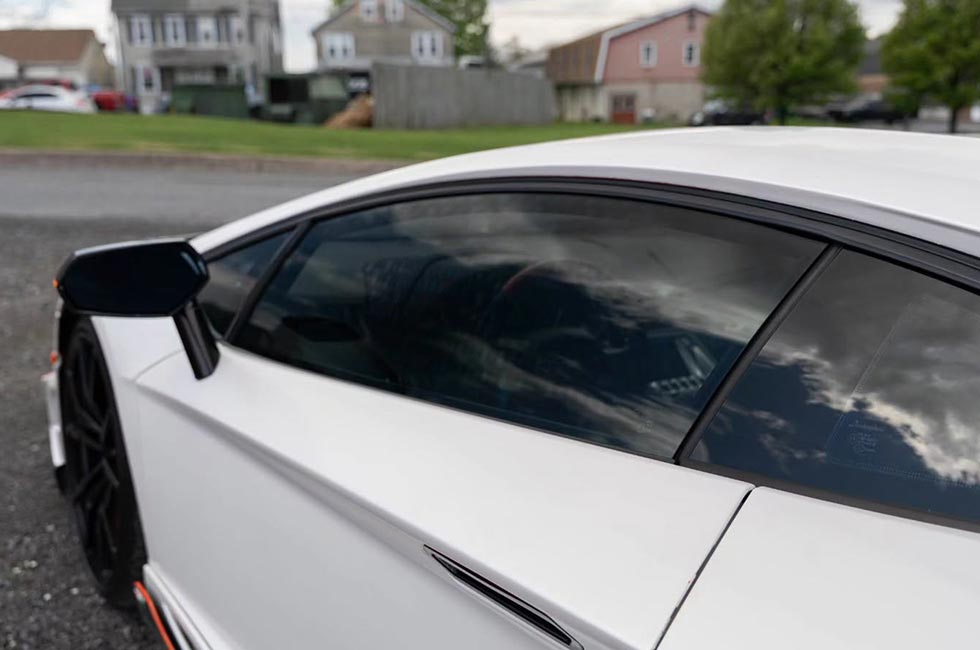
Carbamate HD, used in Terraflex, Panaflex, and Nanoflex, is Flexfilm's pressure-sensitive adhesive. PSA is inherently sticky and bonds instantly on contact — no activation step required.
How It Installs
Even though PSA bonds immediately under pressure, installers still use a wet installation method: both the glass and the film go on wet, which slows the initial stick just enough to allow positioning. Once the film is placed and squeegeed, the water is pushed out and the adhesive bonds right away.
Where PSA Shines
- Curved or contoured glass, like automotive windows, where instant hold helps the film settle into the curve
- Areas needing immediate hold, like near defroster lines or on roll-down windows
- Situations calling for a fast, straightforward application without a lengthy bonding period
Dry Adhesive
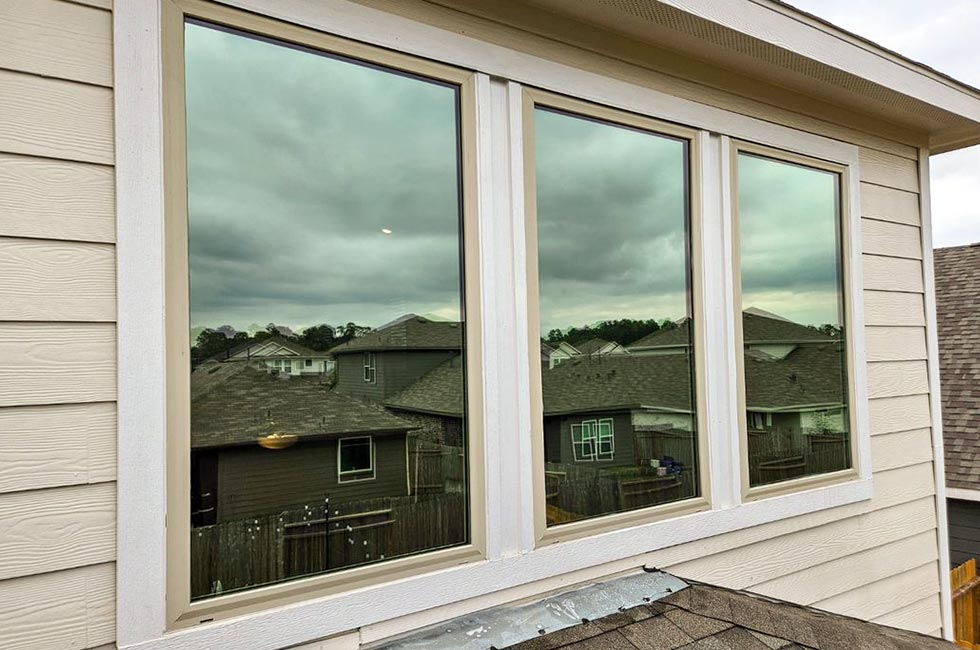
Dry adhesive, commonly used on architectural (flat glass) film, feels completely different — there's no stickiness when you touch it, thanks to a special top coat.
How It Installs
Dry adhesive requires activation with a slip solution during installation. Rather than bonding instantly, it undergoes a slower chemical bonding process with the glass over time, gradually revealing an underlying pressure-sensitive layer as it cures.
Where Dry Adhesive Shines
- Large, flat glass: its non-sticky nature before activation makes it much easier to handle and adjust on big windows.
- Contamination resistance: if debris gets under the film during installation, it can be pulled back, rinsed, and reapplied without compromising the adhesive — something PSA doesn't forgive nearly as easily.
- One-person installs on large pieces: techniques like the reverse roll method make it realistic to install large sheets of dry-adhesive film solo, since the film isn't fighting you the way an instantly-tacky adhesive would.
Side-by-Side Comparison
| Characteristic | Pressure-Sensitive Adhesive | Dry Adhesive |
|---|---|---|
| Activation | None — bonds instantly on contact | Requires slip solution activation |
| Bonding process | Immediate | Gradual chemical bond over time |
| Best suited for | Curved/contoured glass, fast installs | Large flat glass, precision work |
| Contamination handling | Less forgiving once bonded | Can be rinsed and reapplied during installation |
| Typical use | Automotive film (Terraflex, Panaflex, Nanoflex) | Architectural flat glass film |
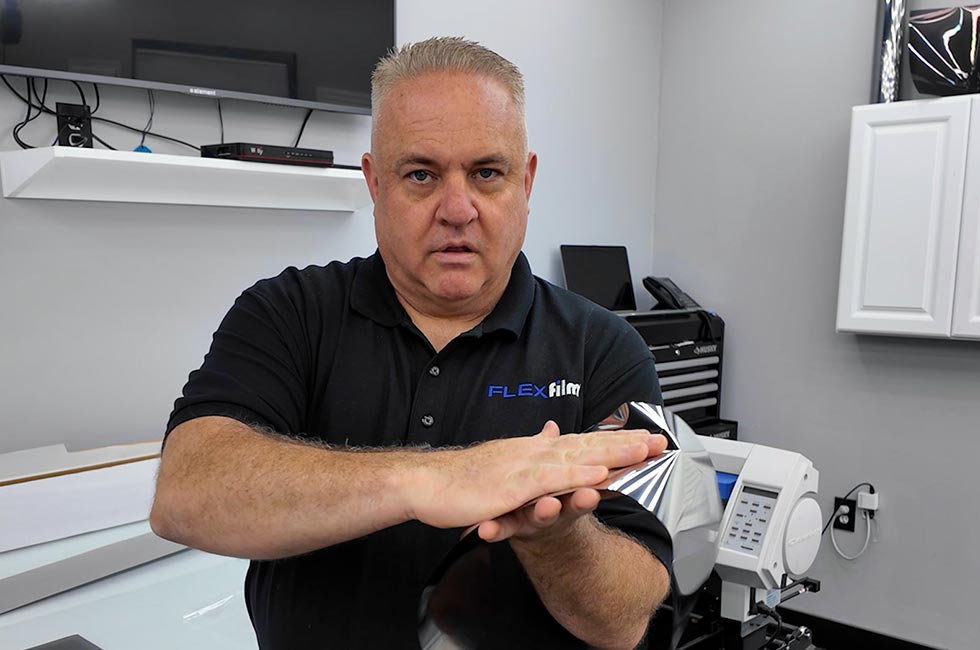
Which One Do You Need?
You generally won't choose an adhesive type directly — it comes built into the film you select. Automotive films use PSA because instant hold matters on curved glass and roll-down windows. Architectural films use dry adhesive because the slower, more forgiving bonding process makes large, flat installations far more manageable. Some installers do use pressure-sensitive adhesive on flat glass successfully, but dry adhesive's flexibility during installation is why it remains the go-to choice for most architectural professionals.