


-

About Flexfilm 2
-

Getting Started 10
-
Core Fundamentals 10
-
-

Orders & Support 83
-
Shipping 10
-
Dealer Rewards 13
-
Ordering & Account 7
-
Pre-Cut Patterns 2
-
General 9
-
Warranty 6
-
Billing & Tax 3
-
Route Package Protection 2
-
Returns & Refunds 2
-
Shop Pay 2
-
Training 1
-
Dealer & Installer Program 4
-
Selling & Quoting 9
-
Marketing & Growth 8
-
Business Operations 5
-
-

Installation Resources 19
-
Architectural 4
-
Automotive 5
-
General 10
-
-

Architectural Window Film 54
-
Safety & Compatibility 17
-
Ownership 2
-
Fundamentals 16
-
Buying Guides 4
-
Performance & Privacy 6
-
Product Guides 9
-
-

Automotive Window Film 40
-
Installation & Ownership 18
-
Product Guides 11
-
Legal & Compliance 3
-
Buying Guides 8
-
-

Tools 10
-
Cutting & Prep 3
-
Application 3
-
Measurement & Layout 2
-
Specialty 2
-
-

Plotters 8
-
Ownership 6
-
Buying Guides 2
-
-

FlexCut Software 25
-
Account & Licensing 5
-
Getting Started 10
-
Troubleshooting 2
-
Using FlexCut 8
-
-

Paint Protection Film (PPF) 10
-
Ownership 3
-
Fundamentals 4
-
Product Guides 3
-
-

Surface Coatings 13
-
Product Guides 7
-
Fundamentals 3
-
Ownership 3
-
What Is Paint Protection Film?


What Is Paint Protection Film (PPF)?
Paint Protection Film (PPF) is a transparent urethane film designed to help protect a vehicle's painted surfaces from everyday road hazards. Commonly installed on high-impact areas such as hoods, bumpers, fenders, mirrors, and rocker panels, PPF acts as a sacrificial barrier between your vehicle's paint and the elements.
PPF is one of the most effective ways to help preserve a vehicle's appearance and maintain its long-term value.
How Does Paint Protection Film Work?
Paint Protection Film is applied directly to the vehicle's painted surfaces.
Once installed, the film absorbs much of the impact from common road debris and environmental contaminants before they can reach the factory paint.
This helps reduce the likelihood of damage caused by:
- Rock chips
- Road debris
- Bug splatter
- Bird droppings
- Minor scratches
- Road salt
- Environmental fallout
Because the film is transparent, the vehicle's original color and finish remain visible.
What Is PPF Made Of?
Modern paint protection films are typically constructed from thermoplastic polyurethane (TPU).
This durable material provides flexibility, impact resistance, optical clarity, and self-healing properties.
Unlike older protection films, modern TPU films are designed to remain clear and maintain their appearance for years when properly maintained.
Benefits of Paint Protection Film
Protection Against Rock Chips
One of the primary reasons vehicle owners install PPF is to help protect against rock chips and road debris.
High-impact areas of a vehicle are constantly exposed to debris thrown from other vehicles and road surfaces.
PPF helps absorb much of this impact before it reaches the paint.
Scratch Resistance
Paint Protection Film can help reduce the appearance of minor surface scratches caused by everyday use.
This includes light contact from washing, loading cargo, or routine vehicle use.
Self-Healing Technology
Many modern paint protection films feature self-healing top coats.
Minor surface imperfections can often become less visible when exposed to heat from sunlight, warm water, or the environment.
This helps the film maintain a cleaner appearance over time.
Hydrophobic Properties
Many premium PPF products feature hydrophobic surfaces that help water bead and roll off more easily.
This can make cleaning easier and help reduce the buildup of dirt and contaminants.
Preserves Vehicle Appearance
By helping protect the original paint finish, PPF can assist in maintaining the appearance of the vehicle throughout ownership.
Where Is PPF Typically Installed?
Paint Protection Film can be installed on virtually any painted surface of a vehicle.
Common coverage options include:
- Front bumper
- Full hood
- Partial hood
- Front fenders
- Side mirrors
- Door cups
- Rocker panels
- Headlights
- Full vehicle wraps
The ideal coverage depends on the owner's budget, driving habits, and protection goals.
What Is FlexGuard PPF?
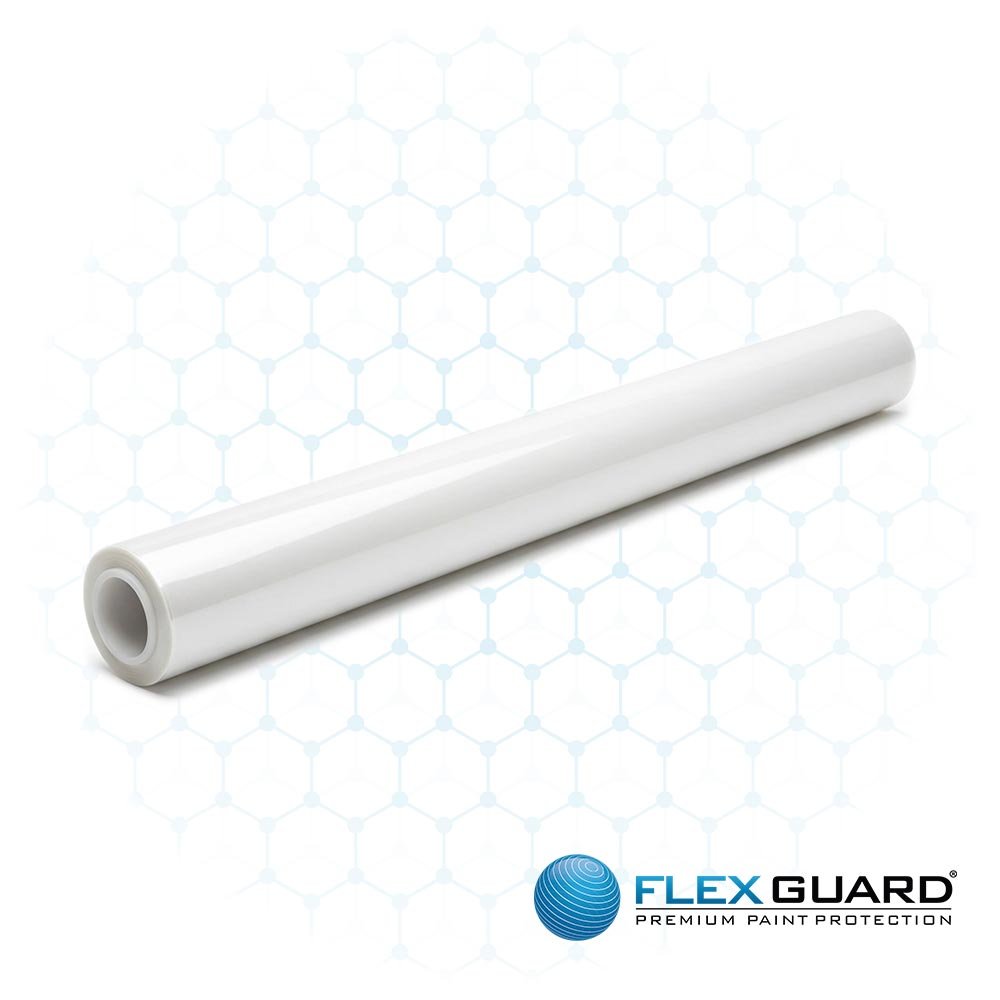
FlexGuard is Flexfilm's premium Paint Protection Film designed to help protect vehicle surfaces from road hazards while maintaining exceptional optical clarity.
FlexGuard features:
- 8 mil urethane construction
- Self-healing technology
- Hydrophobic surface properties
- High optical clarity
- UV resistance
- 10-year limited warranty
FlexGuard is designed to provide long-term protection while remaining virtually invisible once installed.
PPF vs Ceramic Coating
Paint Protection Film and ceramic coatings serve different purposes.
PPF is designed to provide physical impact protection against rock chips, scratches, and road debris.
Ceramic coatings are designed primarily to improve surface protection, chemical resistance, gloss, and ease of maintenance.
While ceramic coatings can help protect against contaminants and make cleaning easier, they do not provide the same level of impact protection as PPF.
Many vehicle owners choose to use both products together.
PPF vs Vinyl Wrap
Although both materials are applied to vehicle surfaces, Paint Protection Film and vinyl wrap are designed for different purposes.
PPF is designed primarily for protection.
Vinyl wrap is designed primarily to change the appearance of the vehicle through color, graphics, or branding.
While some vinyl films offer limited protection, they are generally not intended to replace Paint Protection Film.
How Long Does Paint Protection Film Last?
The lifespan of Paint Protection Film depends on factors such as product quality, installation quality, environmental exposure, and maintenance.
Premium films can provide many years of protection when properly cared for.
Regular washing and proper maintenance help maximize the life of the film.
Does PPF Change the Appearance of My Vehicle?
High-quality Paint Protection Film is designed to be nearly invisible once installed.
Most people will not notice the film unless they are specifically looking for it.
Depending on the product selected, some films may slightly enhance gloss while maintaining the original color and finish of the paint.
Can Paint Protection Film Be Removed?
Yes.
Paint Protection Film can typically be removed by trained professionals when replacement or removal is desired.
When properly installed and maintained, PPF is designed to protect the paint rather than permanently alter it.
Is Paint Protection Film Right for You?
PPF may be an excellent choice if you are looking for:
- Protection against rock chips
- Protection from road debris
- Scratch resistance
- Long-term paint preservation
- Self-healing technology
- A nearly invisible protective solution
It is particularly popular among enthusiasts, daily drivers, luxury vehicle owners, and anyone looking to protect their vehicle's finish.
Key Takeaways
- Paint Protection Film (PPF) is a transparent urethane film designed to protect vehicle paint.
- PPF helps protect against rock chips, road debris, scratches, and environmental contaminants.
- Modern PPF often includes self-healing and hydrophobic properties.
- FlexGuard is Flexfilm's premium Paint Protection Film.
- PPF provides impact protection that ceramic coatings cannot.
- High-quality PPF is designed to remain virtually invisible after installation.
Helpful Links


On this Page
-
What Is Paint Protection Film (PPF)?
- How Does Paint Protection Film Work?
- What Is PPF Made Of?
- Benefits of Paint Protection Film
- Where Is PPF Typically Installed?
- What Is FlexGuard PPF?
- PPF vs Ceramic Coating
- PPF vs Vinyl Wrap
- How Long Does Paint Protection Film Last?
- Does PPF Change the Appearance of My Vehicle?
- Can Paint Protection Film Be Removed?
- Is Paint Protection Film Right for You?
- Key Takeaways
- Helpful Links