



-

About Flexfilm 2
-

Getting Started 10
-
Core Fundamentals 10
-
-

Orders & Support 83
-
Shipping 10
-
Dealer Rewards 13
-
Ordering & Account 7
-
Pre-Cut Patterns 2
-
General 9
-
Warranty 6
-
Billing & Tax 3
-
Route Package Protection 2
-
Returns & Refunds 2
-
Shop Pay 2
-
Training 1
-
Dealer & Installer Program 4
-
Selling & Quoting 9
-
Marketing & Growth 8
-
Business Operations 5
-
-

Installation Resources 19
-
Architectural 4
-
Automotive 5
-
General 10
-
-

Architectural Window Film 54
-
Safety & Compatibility 17
-
Ownership 2
-
Fundamentals 16
-
Buying Guides 4
-
Performance & Privacy 6
-
Product Guides 9
-
-

Automotive Window Film 40
-
Installation & Ownership 18
-
Product Guides 11
-
Legal & Compliance 3
-
Buying Guides 8
-
-

Tools 10
-
Cutting & Prep 3
-
Application 3
-
Measurement & Layout 2
-
Specialty 2
-
-

Plotters 8
-
Ownership 6
-
Buying Guides 2
-
-

FlexCut Software 25
-
Account & Licensing 5
-
Getting Started 10
-
Troubleshooting 2
-
Using FlexCut 8
-
-

Paint Protection Film (PPF) 10
-
Ownership 3
-
Fundamentals 4
-
Product Guides 3
-
-

Surface Coatings 13
-
Product Guides 7
-
Fundamentals 3
-
Ownership 3
-
Why You Can Only Shrink Window Film in One Direction


Why You Can Only Shrink Window Film in One Direction
Flexfilm pre-cut patterns can only be shrunk in one direction, and the pattern sticker tells you which way. If the sticker is oriented facing up and down, shrink your fingers from the bottom; if it's facing sideways, shrink from the side instead.
Shrinking in the wrong direction against the pattern's grain won't give you the result you're expecting, so check the sticker before you start heating.
The Science Behind It: Machine Direction vs. Transverse Direction
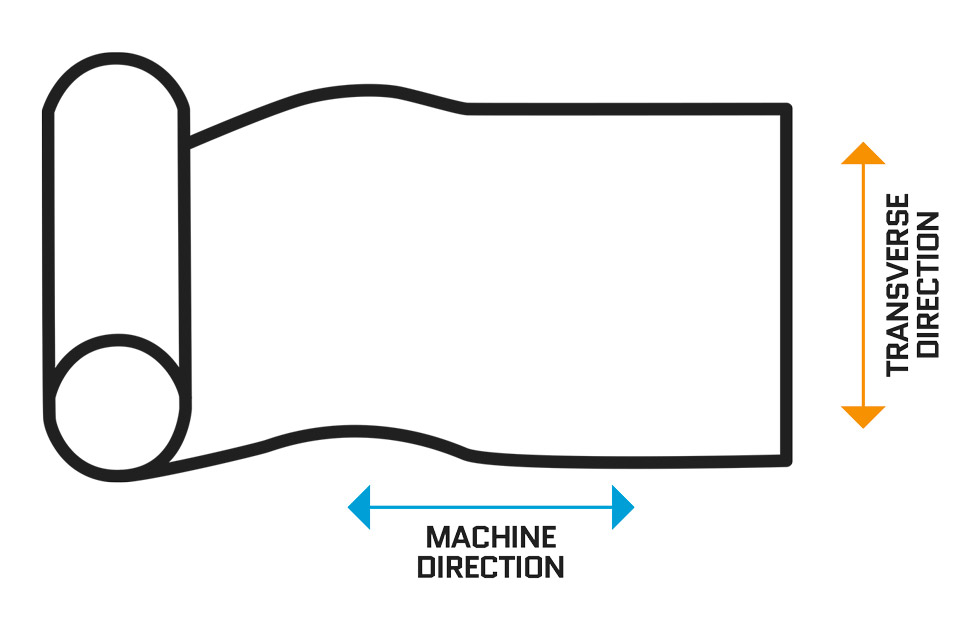
This isn't arbitrary — it comes from how the film is manufactured. As film is produced, it runs lengthwise off a production roll. That lengthwise direction is called the machine direction (MD), and the direction running across the width of the roll, perpendicular to that, is the transverse direction (TD).
During manufacturing, the film is stretched more along the machine direction than the transverse direction. When heat is applied during installation, the film wants to pull back toward its original, less-stretched shape — which is why it shrinks noticeably in the machine direction, while the transverse direction shrinks much less and provides stability against too much distortion.
That's the underlying reason a pattern can only be shrunk one way: you're working with the direction the film actually wants to move, not against it. The pattern sticker exists so you don't have to guess which direction that is on a given piece.
How This Plays Out During Installation
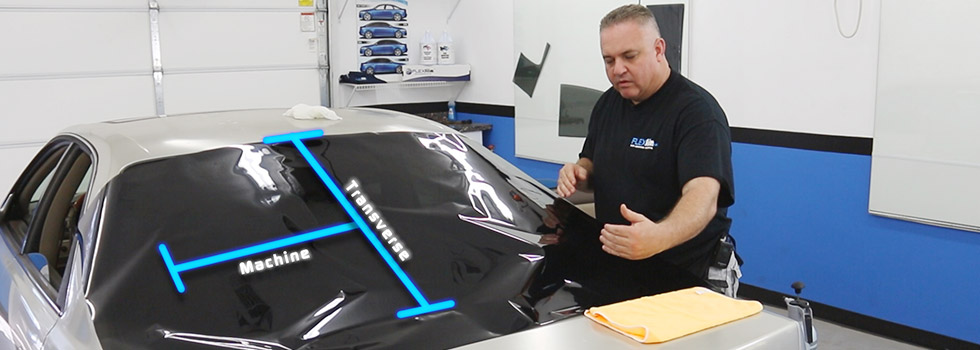
Installers typically start by heat-shrinking along the machine direction first — this does most of the work of conforming the film to the glass. Fine-tuning in the transverse direction comes second, smoothing out the finer details. It's a similar idea to ironing clothes: work out the big wrinkles first, then smooth the smaller ones.
This matters most on curved surfaces, like rear windows, where understanding which way the film wants to move lets you work with its natural tendencies instead of fighting against them — the difference between a smooth, bubble-free fit and a fight with creases.