

There’s something I’ve been noticing in the window tint industry that I can’t unsee anymore.
And oddly enough, it started with sunscreen.
Most people understand SPF. You walk into a store and see SPF 15, 30, 50, even 100. The higher the number, the better the protection, or at least that’s what we are led to believe.

But when you actually look at how SPF works, the picture changes. SPF 30 already blocks about 97 percent of UVB rays. SPF 50 gets you close to 98 percent. SPF 100 might reach around 99 percent.
So here’s the real question.
Why would you spend four times the money for a product that only gives you about a one percent improvement?
That’s the law of diminishing returns. Once you understand it there, you start seeing it everywhere.
Including ceramic window tint.
Ceramic Window Tint and Diminishing Returns
In automotive window film, especially ceramic window tint, performance is usually sold using numbers.
IR rejection. TSER. UV percentages. Spec sheets.
And don’t get me wrong, those numbers matter. Window film performance is real and measurable.
But once you reach a certain level of ceramic tint performance, the gains start getting smaller and smaller.
A quality ceramic window tint already blocks over 99 percent of UV rays and a large portion of infrared heat. When you move up to a higher priced film, are you getting a dramatic improvement in comfort?
Most of the time, no.
At that point, you are fine tuning. You are paying more money for a very small gain.
That does not mean it is wrong. It just means it should be explained honestly.
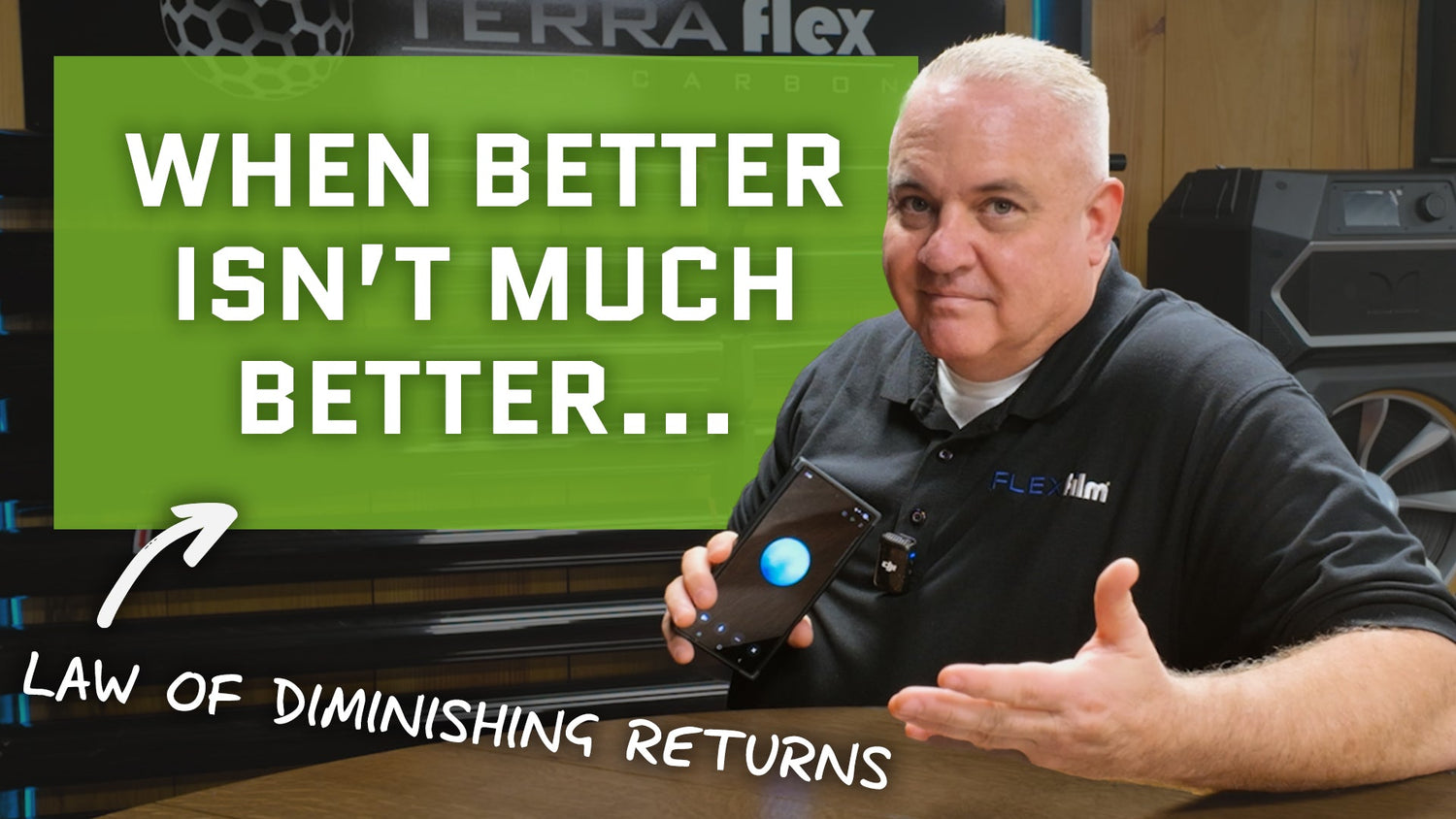
In the video above, I walk through this comparison step by step and bring ChatGPT into the conversation to check my logic. No scripts. No sales pitch. Just a real discussion about window tint performance and value.
Specs Versus Real World Heat Rejection
This is where things usually click for customers.
You can take different ceramic window films, apply them to glass, place them in front of a heat source or heat box, and feel the difference with your hand on the other side.
That test tells you something real.
People don’t need a spec sheet to understand comfort. They understand less heat immediately.
This is why hands on demonstrations work so well when explaining ceramic window tint.

BTU Meters and What You Actually Feel
BTU meters are useful tools. They measure how much heat energy passes through the glass.
That information matters.
But it is not the whole story.
A BTU reading gives you a number.
A heat box gives you a feeling.
They are related, but they are not the same thing.
The best approach is using both.
- Use numbers to support performance claims
- Use real world demonstrations to show comfort
That combination helps customers understand value instead of just chasing specs.

Is More Expensive Ceramic Tint Worth It?
This is not about saying premium ceramic window tint is bad. It isn’t.
It is about understanding where the performance curve starts to flatten.
Once you are already at a high level of window film performance, paying significantly more money may only result in a small improvement. In many cases, that improvement is not noticeable day to day.
That is the law of diminishing returns.
If a customer wants that last bit of performance, that is completely fine. They should just understand what they are paying for.
Honesty builds trust. Trust builds long term business.

What We Offer
A good ceramic window tint is always a balancing act between performance and aesthetics. You want real heat rejection and comfort, but you also want clear views and a film that looks right on the glass. That balance is where a lot of films miss the mark. At Flexfilm, we believe Panaflex hits that sweet spot. It is our entry level ceramic film, but it delivers solar performance you can actually feel without sacrificing clarity. You are not paying for inflated specs or chasing tiny gains. You are getting a ceramic film that does what most people actually want it to do, keep the car cooler while still looking clean.
Common Questions Installers Ask
Does ceramic window tint reach a point of diminishing returns?
Yes. Once ceramic window tint reaches high levels of UV and infrared rejection, additional gains become smaller and less noticeable.
Is higher IR rejection always better?
Higher IR numbers can help, but after a certain point the real world comfort difference is minimal. Glass type and installation quality also matter.
What matters more, specs or comfort?
Specs help explain performance, but comfort is what customers actually feel. The best approach is using both together.
I’m not a lab or a scientist. I’m just a window tinter trying to make sense of what actually matters in this industry.
This video was my first time having an on camera conversation with ChatGPT, and it helped confirm something a lot of installers already know. Once you hit a certain level of ceramic window tint performance, value matters more than chasing numbers.
If this helps you explain ceramic tint more clearly to customers, or helps you think differently about what you sell and why, then it did its job.